Vietnam ratifies EU trade pact, accelerating growth amid COVID-19 pandemic

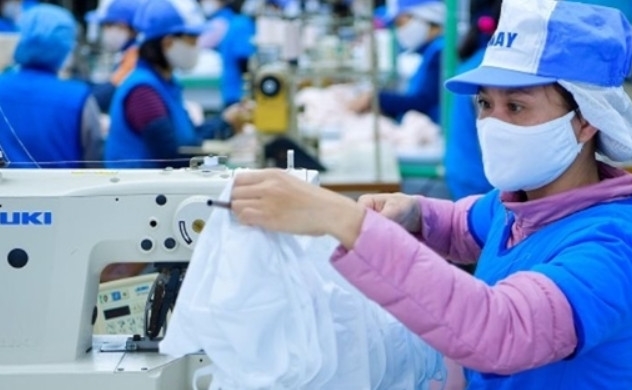
EVFTA will accelerate poverty reduction in Vietnam, helping approximately 0.8 million people escape poverty by 2030. Photo: huonghieuvacongluan.com
Lawmakers ratified the EU Vietnam Free Trade Agreement during a National Assembly meeting session on Monday, opening door for Vietnam’s products to enter the world’s largest trading block with 508 million consumers.The trade deal which was passed at the right time when the country restarted the economy and plan to boost growth amid the COVID-19 pandemic received 100% votes in favour from 457 attending lawmakers.
The trade pact is expected to help Vietnam to increase its GDP by 4.6 percent and its exports to the EU by 42.7 percent by 2025. Meanwhile, the European Commission has projected the EU’s GDP to increase by $29.5 billion and its exports to Vietnam by 29 percent by 2035, according to the Ministry of Planning and Investment.
The benefits are particularly urgent to lock in positive economic gains as the country responds to the COVID-19 pandemic. The trade pack is expected to add 146,000 jobs in Vietnam annually.
The deal, expected to come into effect from July this year, is considered as a lever for growth, opening up opportunities to infiltrate into a market with a gross domestic product of $18 trillion, when nearly all of Vietnam's goods to the EU market will see their import tariffs eliminated in the short term.
This is the highest level of commitment that a partner has given to Vietnam in signed free trade agreements. Vietnam will cut 65 percent of import tax on EU commodities after the deal takes effect, while the rest will be erased over a 10-year period and the EU will cut more than 70 percent of tariffs on Vietnam’s commodities.
Despite Brexit, the ratified trade deal is applied for the UK until December 2020 and its membership in the deal could be extended for two additional years, Minister of Industry and Trade Tran Tuan Anh told legislators.
World Bank has urged Vietnam to fill major legal gaps and address key implementation issues to reap the full benefits of the free trade agreement.
World Bank’s report estimates that by simply enjoying the tariff reduction as agreed, EVFTA could boost Vietnam’s GDP and exports by 2.4% and 12% respectively by 2030, while lifting an additional 100,000-800,000 people out of poverty by 2030.
According to the World Bank, the agreement will also accelerate poverty reduction in Vietnam, helping approximately 0.8 million people escape poverty by 2030, equivalent to a poverty reduction of 0.7%.
The report argues that Vietnam could benefit even more from the next-generation trade deals such as EVFTA and Comprehensive and Progressive Agreement for Trans-Pacific Partnership (CPTPP) if it stimulates a comprehensive agenda of economic and institutional reforms to facilitate compliance with non-tariff agreements.
“If Vietnam can act in a decisive manner to close legal and implementation capacity gaps, it can capitalize on a trade deal whose direct benefits are estimated to be largest in the country’s history,” said Ousmane Dione, World Bank Country Director for Vietnam.
“With COVID-19 acting as a reset button and EVFTA as an accelerator, now is the perfect time to embrace deeper domestic reforms”, Ousmane noted.
The report cites the rules of origin requirement as one of the key challenges for Vietnam to overcome. Even if a product is produced in Vietnam, EU importers might not determine it as such due to the high dependence on imported materials.
The report finds that in key export manufacturing industries, a majority of inputs are sourced from foreign countries (for instance, 62% in electronics and 53% in the automotive sector). It calls for greater efforts to improve linkages between domestic suppliers and foreign enterprises as lead firms in major global value chains.
The introduction of EVFTA is expected to bring more investors into Vietnam both from Europe and the rest of the world. As the flow of foreign investment increase, so does the number of commercial grievances. The report calls for accelerated development of a Systemic Investment Response Mechanism to settle disputes between investors and the state.
The report also makes the case for prioritizing key sectors that make up the bulk of Vietnamese exports to the European market for COVID-19 economic recovery efforts, to maximize the benefits of the trade deal.
Moments after the trade agreement was ratified, lawmakers swiftly confirmed the EU-Vietnam Investment Protection Agreement (EVIPA) with 95.6% share of the vote.
Together with EVFTA, the EVIPA will continue to affirm the country’s important geopolitical position in Southeast Asia, as well as the Asia-Pacific region, therefore serving to elevate the country’s status as a regional power.
The EVIPA will require the country to continue perfecting its institutional and policy system in order to improve its investment and business environment in a favourable, equal, safe, transparent, and more friendly manner to investors from all economic sectors.
The agreement will replace the 21 existing bilateral investment promotion and protection agreements that exist between Vietnam and EU member states, Voice of Vietnam reported.
The EVFTA is scheduled to take effect in August, while the EVIPA must now be approved by the parliaments of the 27 EU member states after the UK completes its Brexit.
Theo dõi Nhịp Cầu Đầu Tư
_111628307.png)